


Strategic Human Resources Management (SHRM) is essentially the process of linking your company’s most important asset, its people directly to its business goals. It’s about more than just standard HR tasks; it’s about making sure your employees are developed, rewarded, and positioned perfectly to help the business succeed. This includes attracting great people, helping them grow, and guiding them to meet the needs of every department.
Why SHRM?
For SHRM to truly work, you need to see the bigger picture. It requires looking at the entire company, understanding its vision, mission, and overall goals, and then managing your people in a way that perfectly aligns with these values.
SHRM plays a major role in ensuring your human resources are not just present, but are actively connected to your company’s strategies. Its main objectives are practical and powerful:
- To drive competitive advantage by building a unique workforce.
- To support innovation by promoting a culture of learning.
- To improve overall business performance (productivity and profit).
When HR policies are created with this perspective, the team stops being just an administrative office and becomes a genuine strategic partner. Every action, from hiring to training to rewarding, has a direct influence on the company’s growth trajectory.
Facing Employee Challenges Head-On
Workforce challenges can be confusing and often slow down operations, from recruiting to internal workflow. To avoid this slowdown, strategic HR professionals work closely with every department to understand their specific goals at the grassroots level.
- They create HR plans that perfectly reflect and support the goals of the wider organization.
- They use available talent and resources to make the HR function itself more effective and efficient.
The bottom line: HR is vital for nurturing and maintaining a qualified, happy staff. Employees need to feel valued and supported to stay committed. Strategic HR requires careful planning: understanding objectives, checking current capabilities, spotting gaps and taking thoughtful corrective actions.
Core Benefits of Strategic HRM
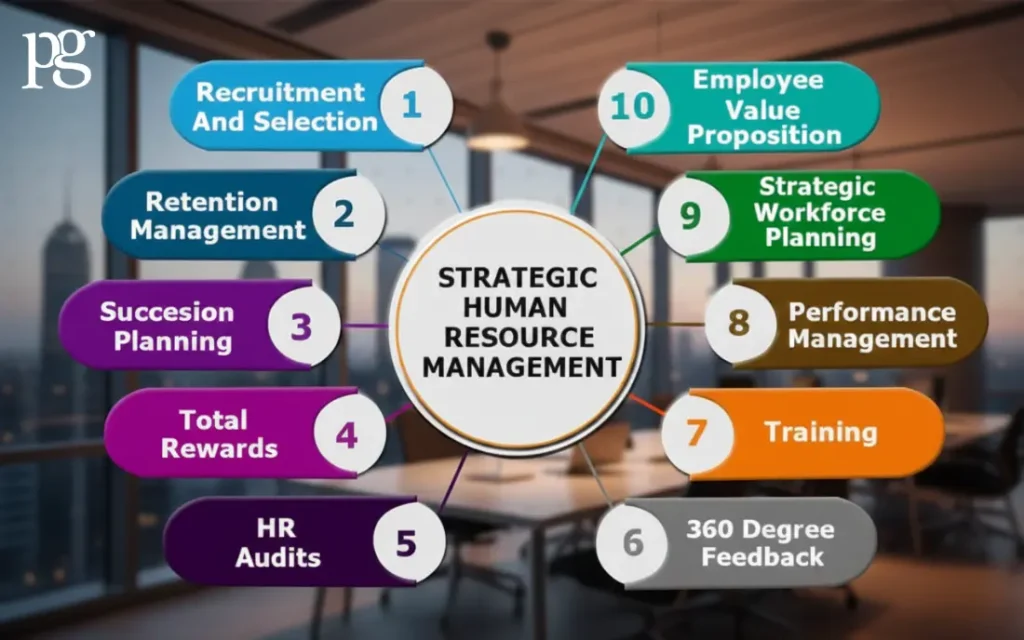
SHRM takes the routine tasks of recruitment and development and elevates them, ensuring you always have the right people in place to achieve your biggest goals.
1. Achieving Long-Term Goals
The HR strategy is designed to help the organization reach both its daily targets and its long-term ambitions. It ensures human resources are utilized efficiently by spotting strengths, addressing weaknesses, and connecting all HR activities to the main business strategy.
2. Providing Clear Direction
Employees perform best when they have a clear understanding of the goals they are working towards. HR is responsible for:
- Selecting the right talent for specific roles across departments.
- Forecasting future workforce needs, which helps prevent unexpected talent shortages and keeps the company aligned with its long-term vision.
3. Motivating and Retaining Talent
People are motivated in diverse ways, some by salary, others by promotions, incentives or recognition. HR understands these individual needs and uses different motivational tools to help every employee perform better.
4. Enhancing Performance and Development
Performance evaluation is a key part of SHRM. Rewards are based on output and contribution. If an employee needs new skills, HR provides the right learning opportunities to help them develop.
Strategic Planning: Looking to the Future
HR planning supports the organization’s future needs by ensuring the right skilled people are hired to meet those long-term goals. Strategic HR professionals help leaders make informed talent decisions and clearly communicate expectations and objectives to staff. When goals are transparent, they are simply easier to achieve.
The main aim of strategic HRM is to improve critical areas like company culture, effectiveness, and resource alignment. By managing these well, HR strengthens the company’s capabilities and enhances cooperation between managers and employees. This boosts company performance through better productivity and profitability.
Conclusion
In short, SHRM has become a necessity, not a luxury. Companies that ignore this alignment may struggle to compete effectively. SHRM simply ensures that your business strategy and your people management strategy are one and the same.
While implementing SHRM may come with some initial difficulties, especially through new training and development, the long-term benefits far outweigh them. Human resources is foundational to success. HR doesn’t just hire and train; it plays a central role in monitoring performance and actively supporting overall organizational growth.