

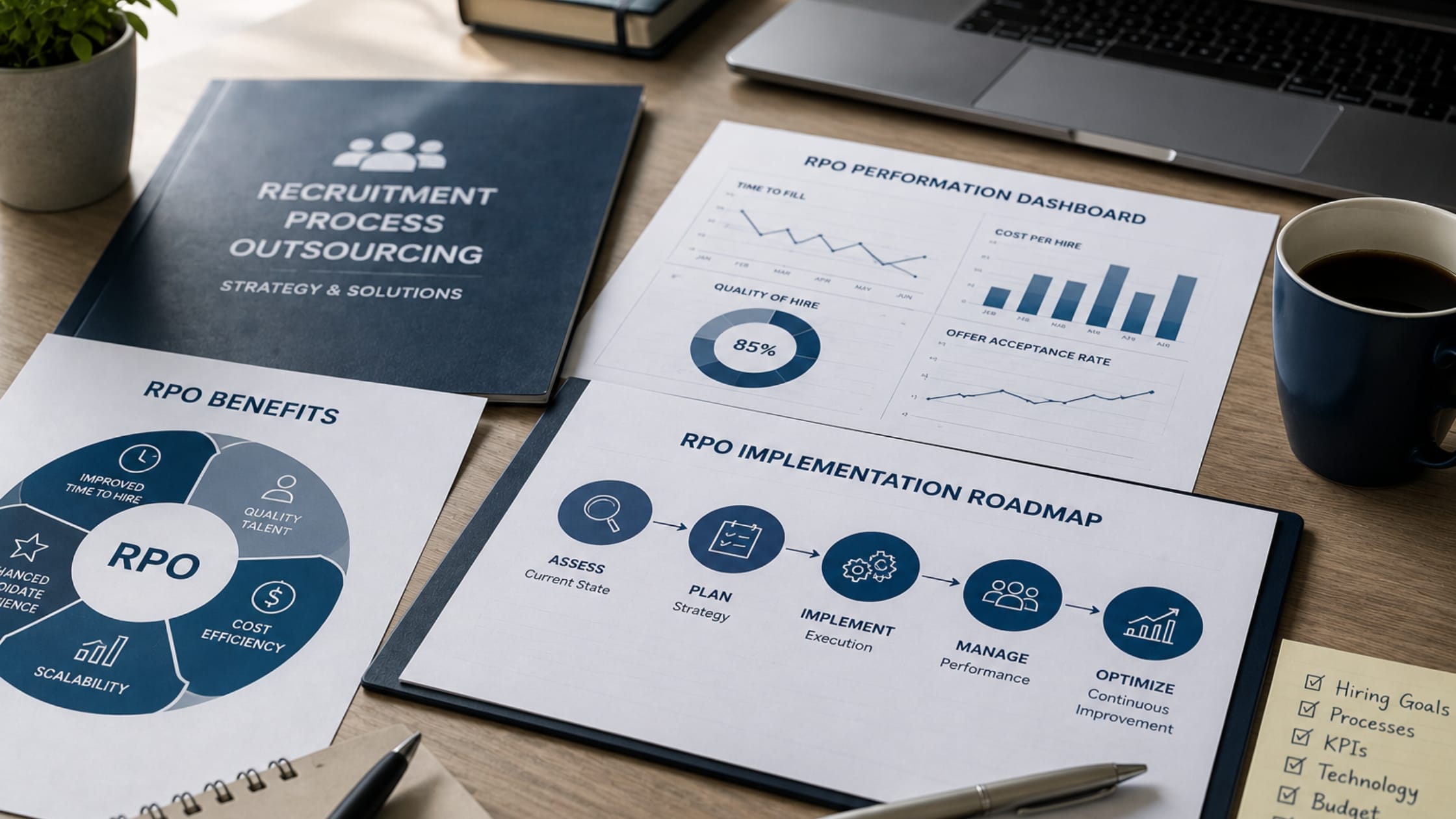

Many organizations begin exploring Recruitment Process Outsourcing (RPO) when hiring starts becoming a business challenge rather than an HR challenge.
Perhaps your company is growing rapidly. Maybe you’re expanding into new markets, struggling to fill specialized positions, or finding that your internal recruitment team is stretched beyond capacity. At this stage, RPO often enters the conversation as a potential solution.
If you’re still exploring the fundamentals of Recruitment Process Outsourcing, you may find our guide on What is Recruitment Process Outsourcing (RPO)? helpful before diving into implementation planning.
However, one of the biggest misconceptions about RPO is that success depends solely on selecting the right provider.
In reality, successful RPO partnerships begin long before a contract is signed.
The organizations that achieve the best results from Recruitment Process Outsourcing are the ones that prepare internally first. They understand their hiring challenges, align stakeholders, define success metrics, and create a clear roadmap before engaging external partners.
This RPO implementation guide is designed to help CEOs, CHROs, HR Directors, Talent Acquisition Leaders, and business owners understand what they should do before evaluating an RPO provider.
Why Are You Considering RPO?
Before reviewing proposals or scheduling meetings with RPO service provider, start with a simple question:
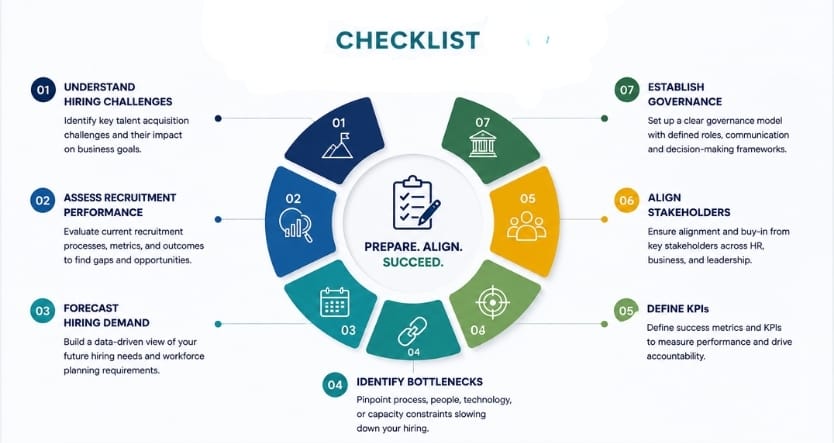
Why are we considering RPO in the first place?
Many organizations jump straight into vendor discussions without clearly identifying the business problem they are trying to solve.
Common reasons companies explore RPO include:
- Rapid business growth requiring large-scale hiring
- Difficulty filling specialist or leadership roles
- High dependency on multiple recruitment agencies
- Long hiring cycles impacting business performance
- Lack of internal recruitment resources
- Expansion into new markets or regions
- Increasing recruitment costs
- Seasonal or project-based hiring demands
Defining the reason behind your RPO initiative helps determine the type of support required and sets realistic expectations from the beginning.
Assess Your Current Recruitment Performance
Before implementing any new recruitment model, it’s important to understand where you stand today.
Many organizations know they have hiring challenges but lack visibility into the underlying data.
Start by evaluating your current recruitment performance:
Time-to-Hire
How long does it take to move a candidate from application to offer acceptance?
Cost-per-Hire
How much are you spending on recruitment agencies, job boards, advertising, technology, and internal resources?
Offer Acceptance Rate
How often are candidates accepting your offers?
Candidate Drop-Off Rate
At which stage are candidates leaving the recruitment process?
Retention Metrics
What percentage of new hires remain with the organization after 90 days, 6 months, or 1 year?
Hiring Manager Satisfaction
Are hiring managers confident in the quality of candidates being presented?
Without baseline metrics, it becomes difficult to measure whether an RPO partnership is delivering meaningful improvements.
Forecast Your Hiring Needs
One of the first conversations any experienced RPO provider will have with you revolves around workforce planning.
Organizations should develop a clear hiring forecast before engaging external partners.
Consider:
Immediate Hiring Needs (0-3 Months)
What positions need to be filled urgently?
Medium-Term Growth Plans (3-6 Months)
Which departments are expected to expand?
Long-Term Workforce Strategy (6-12 Months)
What hiring requirements will support future business objectives?
Understanding expected hiring volume allows both parties to determine the most appropriate RPO model, resource allocation, and commercial structure.
Identify Internal Recruitment Bottlenecks
Not every hiring challenge is caused by a lack of candidates.
In many organizations, the real issues exist within internal processes.
Common bottlenecks include:
- Delayed interview feedback
- Multiple approval layers
- Undefined hiring ownership
- Poorly written job descriptions
- Unclear role requirements
- Compensation approval delays
- Inconsistent interview processes
An RPO provider can help improve recruitment execution, but internal inefficiencies must also be addressed to achieve meaningful results.
Before engaging an RPO partner, map your existing recruitment process and identify where delays typically occur.
Determine Which Recruitment Activities Require Support
One of the advantages of modern RPO solutions is flexibility.
Not every organization needs a fully outsourced recruitment function.
Some companies require support across the entire recruitment lifecycle, while others need assistance only in specific areas.
For example:
- Candidate sourcing
- Market mapping
- Screening and assessments
- Employer branding
- Recruitment technology
- High-volume hiring campaigns
- Executive recruitment support
Understanding which parts of the recruitment process require support helps create a more effective and cost-efficient engagement model.
Define Success Before Implementation Begins
One of the biggest mistakes organizations make is launching an RPO engagement without clearly defining success.
Before implementation begins, establish measurable objectives.
Operational metrics may include:
- Time-to-fill
- Time-to-shortlist
- Cost-per-hire
Quality metrics may include:
- Quality of hire
- Offer acceptance rate
- Candidate experience
- Hiring manager satisfaction
Strategic metrics may include:
- Talent pipeline strength
- Workforce planning accuracy
- Diversity hiring outcomes
- Recruitment scalability
Clearly defined KPIs ensure both the organization and the RPO provider remain aligned throughout the partnership.
Establish a Governance Framework
The most successful RPO partnerships operate with clear governance structures.
This ensures accountability, transparency, and continuous improvement.
A governance framework should include:
Weekly Operational Reviews
To discuss open positions, candidate pipelines, and recruitment activity.
Monthly Performance Reviews
To evaluate recruitment metrics, hiring outcomes, and process improvements.
Quarterly Strategic Reviews
To assess workforce planning, hiring forecasts, and long-term business objectives.
Regular communication helps maintain alignment and allows both parties to adapt as hiring requirements evolve.
Questions Every CEO and HR Leader Should Answer Before Meeting an RPO Provider
Before beginning discussions with potential partners, your organization should have clear answers to the following questions:
- Why are we considering RPO?
- What hiring challenges are we trying to solve?
- How many people do we expect to hire over the next 12 months?
- Which positions are most difficult to fill?
- What recruitment metrics do we currently track?
- What KPIs will define success?
- Who will own the relationship internally?
- Which stakeholders need to be involved?
- What recruitment technology do we currently use?
- Which recruitment activities require external support?
The more clarity you have before engaging a provider, the more productive and valuable those conversations will be.
Final Thoughts
Recruitment Process Outsourcing is often viewed as a hiring solution. In reality, it is a business transformation initiative that can significantly impact growth, workforce planning, operational efficiency, and long-term talent strategy.
The organizations that achieve the greatest success with RPO are not necessarily those that choose the largest provider or negotiate the lowest fee. They are the organizations that prepare effectively before implementation begins.
Before evaluating RPO providers, take the time to assess your recruitment performance, forecast hiring demand, align stakeholders, define success metrics, and identify internal challenges.
By doing so, you’ll be in a far stronger position to select the right partner, implement the right solution, and build a recruitment function capable of supporting sustainable business growth.
Speak with our RPO Consultants to discuss your hiring goals and explore whether an RPO model is the right fit for your business.